How to Plan a Productive Band Rehearsal From Start to Finish
A structured rehearsal saves time and builds better music. Here is how to run one from the first note to the last.
New bands lose more progress in rehearsal than anywhere else. Here are six specific mistakes to stop making before your first performance.
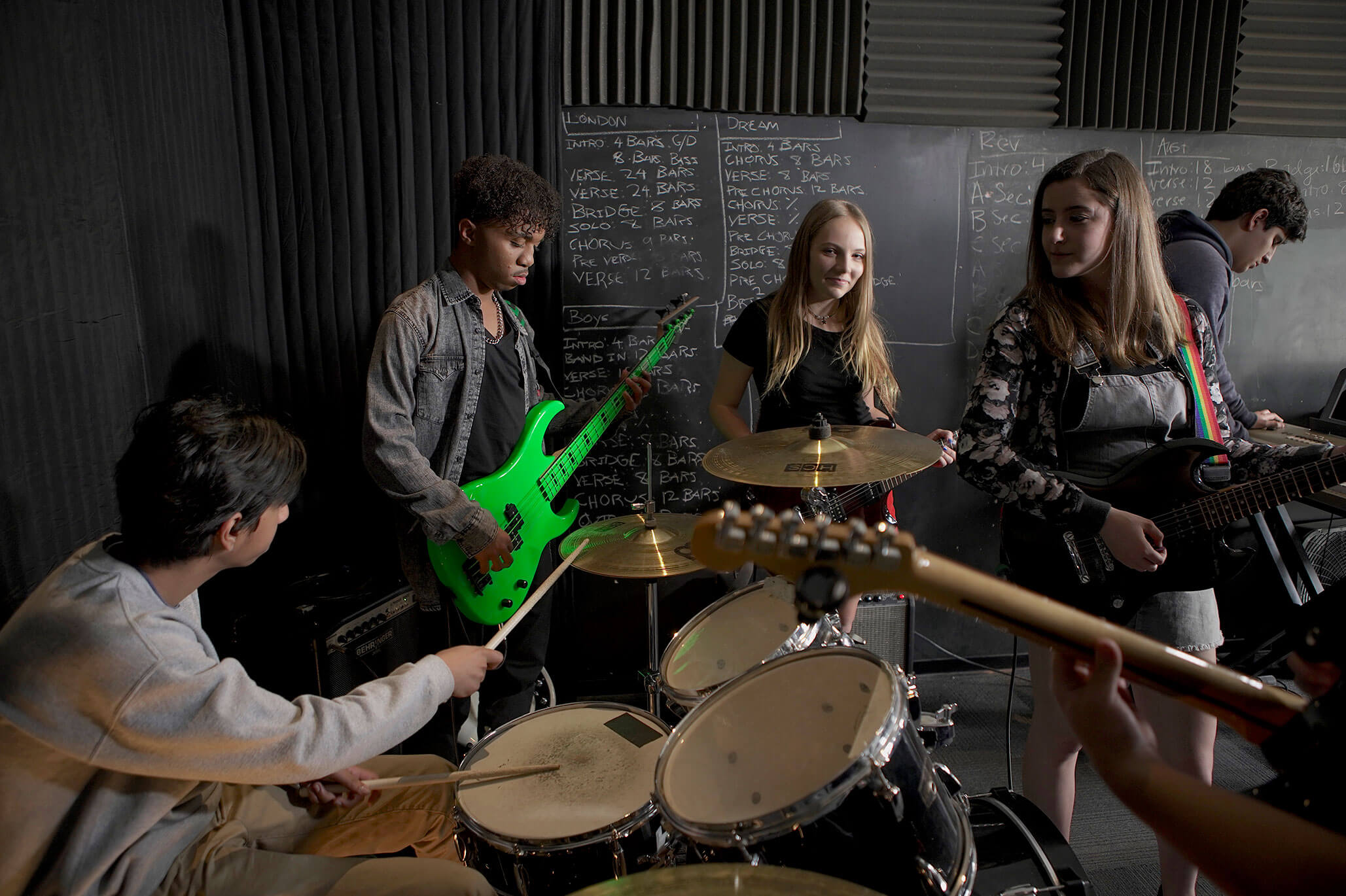
Starting a band is straightforward enough. Find some people who want to play, find a space, start rehearsing. What most new bands discover quickly is that rehearsal time disappears fast, and not always because anyone is slacking. The problem is usually structural. Without a clear framework for how you run your practices, you can spend three hours together and walk away having accomplished almost nothing.
These six mistakes show up constantly in early-stage bands. Identifying them is the first step toward fixing them.

This one causes more wasted rehearsal time than anything else. Rehearsal is not the place to learn your part from scratch. It is the place to put your individual parts together, identify where they do not align, and work through those specific spots as a group.
If a guitarist is still fumbling through a chord progression while the drummer and bassist are waiting, everybody loses momentum. The social pressure to be patient about it usually keeps people from saying anything, which makes it worse over time.
The fix is to set a clear expectation before the first rehearsal: come in knowing your part well enough to play it through at tempo, even if it is rough. That standard does not have to be perfect performance-ready execution. It just means the group can start assembling the piece instead of watching one person figure out their homework.

New bands tend to treat each rehearsal like a dress rehearsal, starting at song one and playing through to the end. This feels productive because it fills the time, but it does not actually solve problems. You are just repeating the same mistakes in the same sequence.
A more useful approach is to identify two or three specific problem areas before you start and dedicate the majority of your rehearsal time to those. Maybe the transition into the chorus of your second song falls apart every time. Maybe the ending of your closer never lands together. Those are the things that deserve focused repetition, not another full run-through of material you can already do.
Save the full run-through for the final portion of rehearsal, once you have done the repair work. That way the run-through also functions as a check to see whether the fixes actually held.

Someone has to be responsible for keeping rehearsal on track. That does not mean the band needs a dictator. It means someone needs to watch the clock, redirect conversations that drift too far off topic, and call the next thing when the current thing has been addressed.
Without that, rehearsals tend to turn into long hangouts with occasional music. There is nothing wrong with enjoying each other’s company, but if your first small performance is six weeks away and you have eight songs to prepare, you cannot afford to spend forty minutes of every rehearsal talking about unrelated things.
Rotate the role if you want, or keep it with one person who is naturally inclined toward it. Either way, name the role and fill it.

Many new bands rehearse at volumes that do not reflect what they will sound like in a performance setting, or they never take time to check whether everyone can actually hear each other. A drummer who cannot hear the bass player and a vocalist who cannot hear themselves over the guitars are both playing partially blind.
Spend time early in your rehearsal process getting your internal balance right. Can the vocalist cut through without straining? Can the rhythm section lock together without the guitars swamping them? These questions matter more than polish on individual parts, because if your mix is wrong, the polish will not save you.
This does not require a professional sound engineer. It requires someone standing in the room and listening from a few feet back while the rest of the band plays, then making honest adjustments.
Once you can play the songs, there is a second layer of work that new bands often skip entirely: how the performance actually looks and feels. Where does everyone stand? What happens between songs — is there a plan for that silence, or does it just get awkward? Does the singer know what they are going to say, or are they going to stare at the floor while the guitarist retunes?
These things can be rehearsed. They should be rehearsed. A dedicated run-through focused entirely on performance mechanics — staging, transitions, spoken moments, how you end the set — will prepare you for things that pure musical rehearsal never will.
This kind of run-through works best after your songs are solid. Trying to work on staging while the music is still unreliable splits everyone’s focus in a way that does not help either problem.
This sounds like permission to be lazy, but it is the opposite. Playing music in a group is mentally demanding, and attention degrades over a long rehearsal if you do not reset it. Running songs for two hours straight without stopping often means the last forty minutes are less productive than they would have been with a ten-minute break in the middle.
A short break — long enough to step away from the instruments, get some water, have a non-music conversation — is not lost rehearsal time. It is what keeps the second half of your rehearsal from becoming diminishing returns. Plan it deliberately rather than waiting until someone gets frustrated enough to call for one.
Getting these six things under control will not guarantee a perfect performance, but they will make your rehearsals measurably more productive and your preparation more honest. The goal is to walk into your first small performance having actually worked through the material, not just having spent time in the same room with it.
Source: https://www.schoolofrock.com/resources/music-industry/how-to-have-a-successful-rehearsal
A structured rehearsal saves time and builds better music. Here is how to run one from the first note to the last.
First rehearsal coming up? Here's how to walk in ready, keep the session productive, and avoid the most common rookie mistakes.